Customized application forms
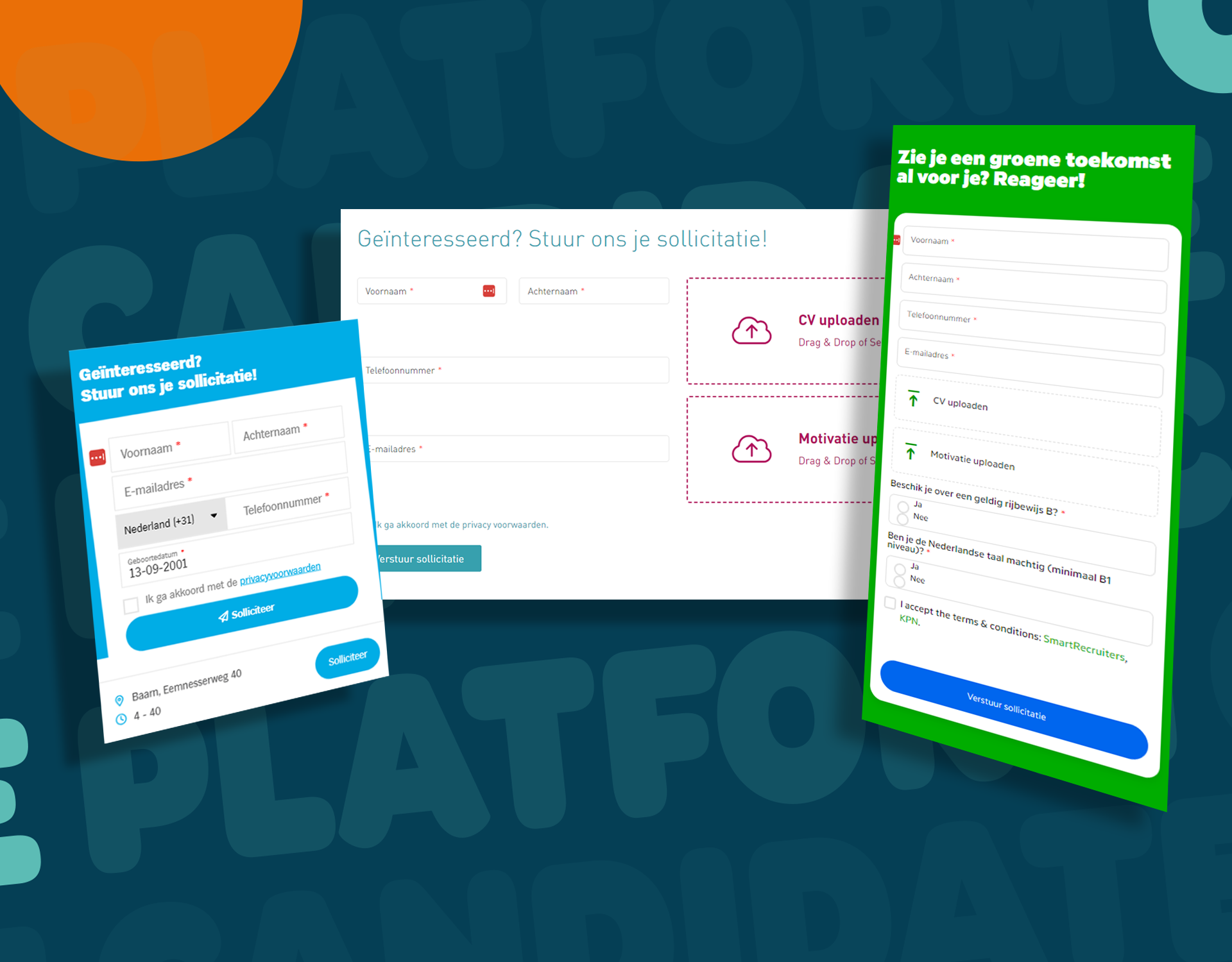
The application form: A crucial step in the candidate journey
The application form is undeniably one of the most important features of your job site or recruitment platform. It's the point where candidates decide whether to submit their details and begin the application process. Yet, for many, it can also be the barrier that prevents them from following through. If the application form isn’t user-friendly, it can lead to frustration and, ultimately, abandoned applications. Therefore, optimizing the form for a smooth experience is essential for both the candidate and the organization.
The application form plays a dual role: on the organization's side, it collects structured data from applicants, while on the candidate's side, it should be as simple and seamless as possible. However, these two interests don't always align, making it important to find a balance that works for both parties.
The impact of the labor market and candidate expectations
In today’s competitive job market, where the demand for talent is higher than ever, it’s crucial to prioritize the candidate's experience. With workloads high and recruitment campaigns becoming more expensive, optimizing the job application process is a must to improve conversion rates. No matter how well-crafted your job ad is or how well you’ve tailored it to your target audience, the application form is the final hurdle in the candidate journey and can make or break the process.
For example, did you know that every additional required field on an application form can lead to a 5% decrease in conversions? If your form has 10 mandatory fields, you risk losing up to 50% of potential candidates. A lengthy or complicated form not only wastes candidates' time but also increases the likelihood that they’ll abandon the application before completing it. In a tight labor market, there’s no need to overcomplicate the process, especially when it could cost you valuable candidates.
Mobile optimization: Why accessibility across all devices is essential
An important consideration in today’s digital world is the fact that most online traffic now comes from mobile devices. If you’ve launched a robust social media campaign driving candidates to your job posting, it’s a missed opportunity if your application form doesn’t function well on mobile. Imagine this: a candidate sees an enticing job ad on social media, clicks the link, and lands on an application form that’s only optimized for desktop use. A mandatory resume upload that doesn’t work well on mobile could frustrate the candidate, causing them to abandon the process. In this case, you’ve not only lost the candidate, but also the investment you made in the campaign.
Full flexibility with Serena CMS: Customize your application forms to fit your needs
Luckily, Serena offers the tools and functionality to fully customize your job application forms. You can create different forms for different audiences, tailoring them to meet the specific requirements of each role and target group. With the drag-and-drop form builder, you can decide how many fields to include and which ones should be mandatory. You have complete control over the form’s layout, whether you want a shorter form to make it easier for applicants or a more detailed one for specific information.
One of the standout features of Serena CMS is the ability to create separate versions of your application form for mobile and desktop users. This enables you to optimize the form for each device type, ensuring an optimal user experience across smartphones and desktops. With so many applicants applying via mobile today, Serena gives you the flexibility to enhance the experience for all devices, which is crucial for boosting conversion rates.
Integrating application forms with Your ATS
If you’re using Serena CMS alongside an Applicant Tracking System (ATS), it’s essential that your application form includes the necessary fields required by the ATS. This ensures that candidate information is accurately captured and processed without the need for manual entry. Customizing the form to meet ATS requirements streamlines your hiring process and prevents time-consuming data entry, helping you operate more efficiently.
Conclusion: The application form as a key success factor
The application form plays a pivotal role in your recruitment strategy, and optimizing it for the best user experience is crucial. By understanding the needs of your target audience and making the form simple, mobile-friendly, and flexible, you significantly boost your chances of attracting successful applications. Serena CMS offers the right tools to customize application forms to meet both organizational and candidate needs. With the right technology in place, you can successfully attract and retain top talent.
Want to explore how to effectively leverage job application forms with Serena CMS? Contact us for a demo and discover all the possibilities!