Realistic job preview: why an honest vacancy page works
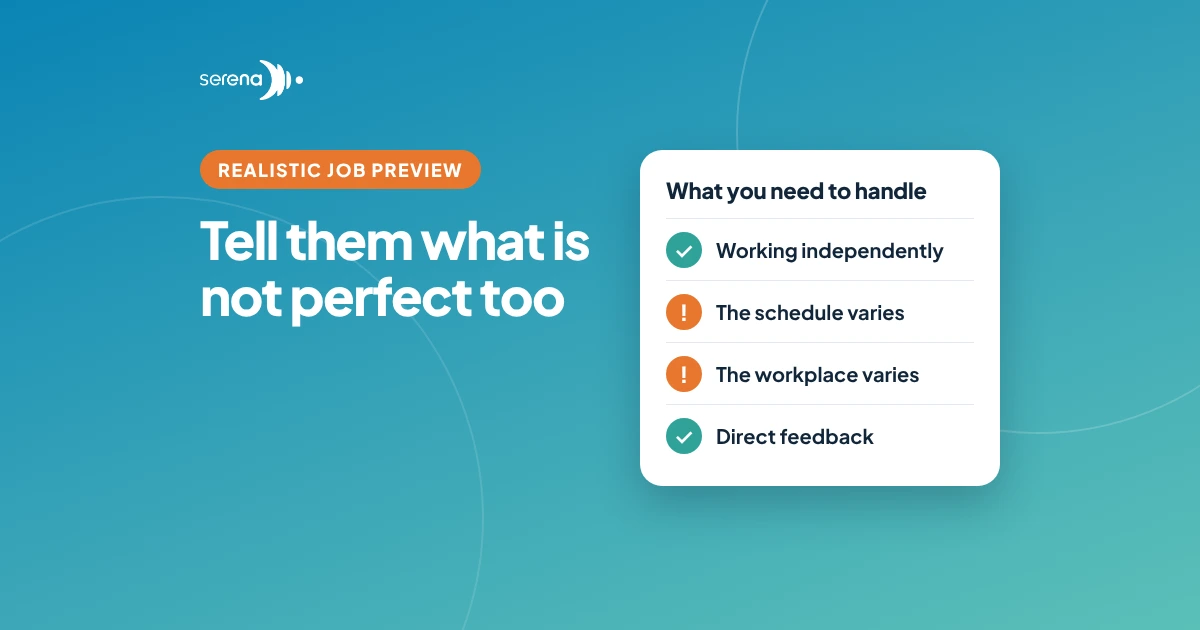
Every candidate who drops out during the first interview or in the first weeks costs you time and money. Often that happens because the work turns out differently from what the vacancy suggested. A realistic job preview addresses that earlier. You show what the work really looks like, including the less glossy sides, before someone applies. A few Dutch employers do that remarkably openly. In this article you look at three examples and how to set it up on your careers site.
What is a realistic job preview?
A realistic job preview, or RJP, is an honest picture of a role before the candidate applies. It shows what the work delivers and also what it demands: the hours, the pressure, the changing workplace, the things that do not come easily. The candidate can then judge whether the job fits. The idea behind it is that people who choose knowingly stay longer and fit better.
Why honesty makes your employer brand stronger
The whitepaper "Why employer branding is the driving force behind your business strategy" by Cartel Works argues that an employer brand stands or falls with credibility. If you promise something daily practice does not deliver, you lose that trust. The paper also refers to a 2022 study by Achnack and Vantilborgh. Employees who know what their employer expects of them experience less stress and fewer burnout complaints.
A strong employer brand also pays off in recruitment. According to the same whitepaper, candidates are two to three times more likely to apply to organisations with a strong employer brand. Cost-per-hire is said to be up to 50% lower at companies that use employer branding strategically. The paper gives no source of its own for this, and it concerns employer brand in general, not job previews. Treat it as an indication that credibility pays back. The paper was written from a Flemish perspective, but the logic applies in any labour market, including the Netherlands.
Three examples of honest recruitment
Upfront
The careers page of Upfront is mostly about what is expected of you. You work independently, get little guidance and reach your monthly targets yourself, or say in time that you are stuck. The company communicates directly and distances itself from family rhetoric. The tone stays light and human. Anyone reading it knows within two minutes whether it fits.
Verspeek
Installation company Verspeek turned its recruitment message around with the site Kom niet werken bij Verspeek ("Do not come and work at Verspeek"). The company wants to grow in job satisfaction rather than size, and stays small at around thirty employees. The site discourages applying with exaggerated warnings in informal language, then still leads the visitor to the vacancies or a waiting list. It is humour. The humour makes the culture concrete, and people who feel at home in that tone apply.
ING
Under the title "This job is not yours", ING takes an honest tone about the work. Your weeks will not be perfect, your planning will not be great and your work will not always be in the same place. A bank that says this upfront stands out in a market where vacancies mostly sound pretty.
The tone differs per employer. The principle is the same: say upfront what comes with the job.
How to set up a realistic job preview on your careers site
- Ask employees who do the role now what they wish they had known earlier.
- Add a block per role to the vacancy page, for example "What you need to handle". Keep it short and concrete: hours, workplace, pace and what disappoints.
- Write in your brand's tone of voice. Humour suits one company, a plain list another.
- Add a check question to the application form, such as "Have you read what this role asks of you?".
- Measure what it does and adjust the block.
A block per role fits the Job Value Proposition from the whitepaper: the layer that makes concrete what makes one role attractive compared with the market. Honest points belong there too. How to add a check question is covered in application forms per vacancy.
In the Serena CMS you edit vacancy pages and blocks yourself, in a few minutes. With Google Analytics and, in the Advanced package, the Serena Data Layer you see where candidates stop. Which KPIs to follow on top of that is covered in KPIs beyond time to fill. You can read more about what the Serena platform can do on the website. How employer branding and a careers site fit together is covered in employer branding within RPO.
What to watch for
Do not expect the number of applications to rise. It may even fall. Also look at the quality of the inflow, the number of candidates who move through the process and how quickly people leave after being hired.
An honest vacancy page does not list complaints, it gives context. Only write what is true for this role. A joke like Verspeek's only works if your culture is like that. For technical and blue collar roles, daily practice is often the strongest argument. You can read more in careers sites in technical industries. The same goes for blue collar recruitment. In the case studies you can see how organisations set up their sites.
Frequently asked questions
What is a realistic job preview?
An honest picture of a role before the candidate applies, including what the work demands and what disappoints.
Does honesty put candidates off?
Some, yes. Someone who drops out before applying costs you no interview time. Measure the quality of the inflow next to the number.
Can I do this without a new site?
Yes. Start with one role that has a lot of drop-out and adjust that vacancy page.
Does it suit every role?
It works best for roles where daily practice differs from the image, such as shift work or a changing workplace.