Employer branding within RPO: who owns the employer story?
An RPO team speaks on behalf of the employer. Every InMail, phone call and vacancy text carries the client's brand. If nobody has written down what that brand promises, each recruiter fills it in. TalentWorks therefore calls employer brand the missing piece in RPO: it shapes how you source, what you say and whom you select. This article explains how to split the roles and what the careers site does. It belongs to our guide for RPO partners.
What happens without a written story
Candidates hear a different story from the recruiter than they read on the site. The vacancy texts of three recruiters sound like three employers. A campaign promises growth opportunities that appear nowhere on the site. Each moment is small, but together they make the employer less credible, and you notice it in offer acceptance and early attrition.
TalentWorks also points to a second effect: RPO is often judged on time to fill and cost per hire. Those numbers can look good while the quality of inflow lags. The employer story is one of the things that drives quality.
A workable split of roles
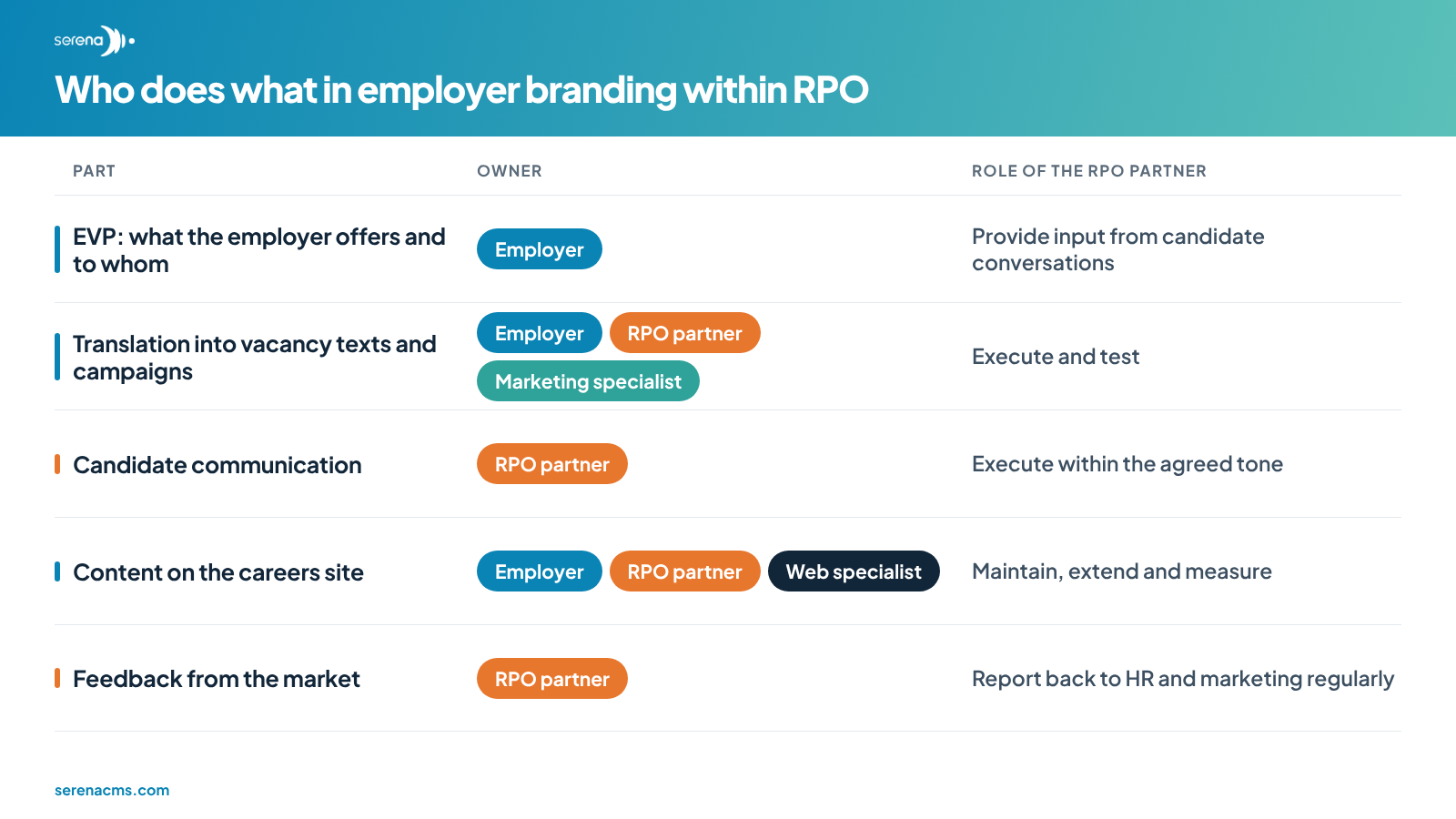
The point partners underestimate most is the feedback. An embedded RPO team hears every week why candidates drop out or get excited. That information is gold for the EVP, provided someone collects and shares it.
The site as a fixed home
Campaigns stop, recruiters change and contracts end. The careers site stays. That makes it the logical place to record the story: with employee stories, teams, projects and explanations of career paths. At Randstad the site is built around journeys for starters, traineeships and the Randstad experience. At Equans projects show what someone will work on. Gold partner Getnoticed built that site on Serena.
With Serena you manage that content yourself in the CMS. A new page or an extra story takes minutes and no quote. If you want to set up the site on a smaller budget, start with a lighter package.
Agreements for the contract
- Who decides on the EVP and who may change it.
- Which content the partner publishes itself and what goes past HR or marketing.
- How often the partner reports what it hears in the market.
- What happens to content and data when the contract ends.
We work out that last point in who owns the site when the RPO contract ends.
Is employer branding a task for the RPO partner?
Only if it is in scope. The EVP stays with the organisation, the partner executes and provides input.
What if the client has no EVP?
Start there. EVP development is a service many partners offer around the site, see the article on consultancy.
How do you notice the story does not hold?
From early attrition, declined offers and questions candidates keep asking.
Want to help your client record the story? See what the Serena platform offers, or read on about KPIs that also measure the site.